
Showing all 7 resultsSorted by price: low to high


A Complete Guide to Live Edge Tables
Most modern people are accustomed to tables with smooth, symmetrical outer edges. However, there is a growing trend to replace those boring smooth-edge tables with traditional live-edge tables.
The difference is that live-edge tables retain the natural edge of the wood that was used to craft them. The artisan leaves the original edge of the hardwood slab rather than cutting the edge to smooth it out. Even though it will make the edge appear misshapen and asymmetrical, it establishes a rustic and traditional appearance that many homeowners care about today.
What better way to establish a natural interior setting than to incorporate the original character, style, and uniqueness of the wood into your tables? It will let you show off the natural beauty and shape of the hardwood tree while still giving your table the same durability, resilience, and longevity that you would expect from it.
How Live-Edge Tables Are Made
Live-edge tables are made with nature, beauty, and durability in mind. Here are the typical steps involved in the live-edge table production process:
1) Choose the Wood Type
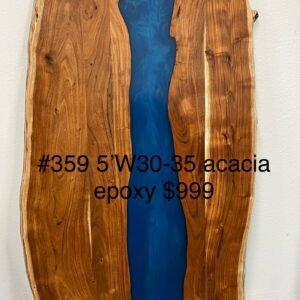
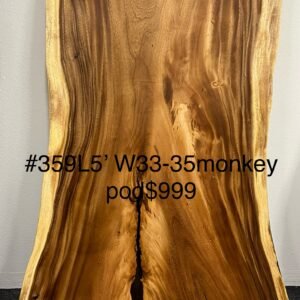
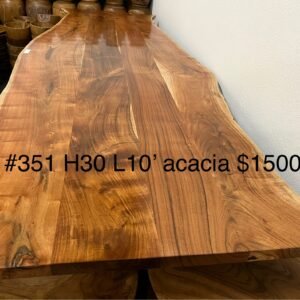
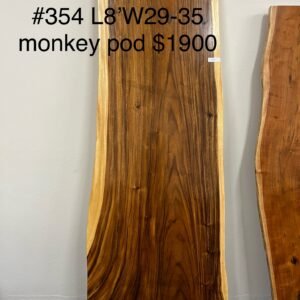
The first thing an artisan will do is choose a particular type of wood, such as acacia, tamarind, monkeypod, buckeye, or olive. Each wood type comes with its own unique set of characteristics, color tones, and durability. We’ll dive into that more in the next section.
2) Cut the Slab
The artisan will proceed to cut a large, singular, longitudinal slab of wood from the tree.
3) Modify the Slab
The artisan will remove bark from the wood if there is any on it. From there, they will level and sand the surface of the wood to make it smooth. However, they won’t make any modifications to the raw edge of the wood. That will remain intact.
4) Seal the Slab
The artisan will seal the wood slab with varnish, oil, or an epoxy resin. The sealant preserves the aesthetics and durability of the wood.
5) Add the Base
Artisans will choose between steel legs and wooden frames for the base of the table. In many cases, steel legs are chosen for the base to create a contrast between the bottom and the top. Steel legs also add more durability and stability than wooden legs.
Which Wood Type is the Best for Live Edge Tables?
The artisan will do most of the hard work and decision-making for you during the production process. The only thing you need to think about more than anything is the type of wood you want for your live-edge tables.
Here are the differences in the choices:
- Acacia – Medium to high durability with a warm golden-brown color tone. It often features darker streaks and natural ridges, giving it an exotic, eye-catching look.
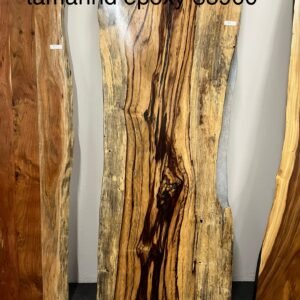
- Tamarind – Known for its striking contrast between light sapwood and dark heartwood. Tamarind is dense and durable, with unique patterns that make every slab one of a kind.
- Monkeypod – A popular choice for live-edge furniture, featuring smooth grain, strong durability, and beautiful natural gradients from light outer edges to deep brown centers.
- Buckeye – A softer wood prized for its dramatic color variations, including gray, cream, and blue tones. Buckeye slabs are highly decorative and perfect for statement pieces.
- Olive – Dense and durable with intricate, swirling grain patterns. Olive wood has warm golden tones with dark streaks, giving it a refined and elegant appearance.
Now that you have a better understanding of which wood species is right for your space, you are one step closer to choosing the perfect live edge table in San Diego. If you are searching for a custom, handcrafted live edge table in San Diego, Epoxy Tables Online specializes in creating one-of-a-kind pieces designed to match your style and built to last for years to come.